Finance teams
Make AI reliable enough for finance.
Give Claude and Codex vetted GTM and finance data, repeatable calculations, and your team’s way of working.
QFlow Desktop connects your AI tools through MCP. Governed recipes and shared skills turn that foundation into forecasts, variance analysis, and board reporting you can review.
Trusted by








Your AI needs more than another export.
Pipeline lives in the CRM. Revenue and actuals live in finance systems. QFlow brings those inputs onto governed definitions, then gives your AI a repeatable way to use them.
01
Vet the inputs
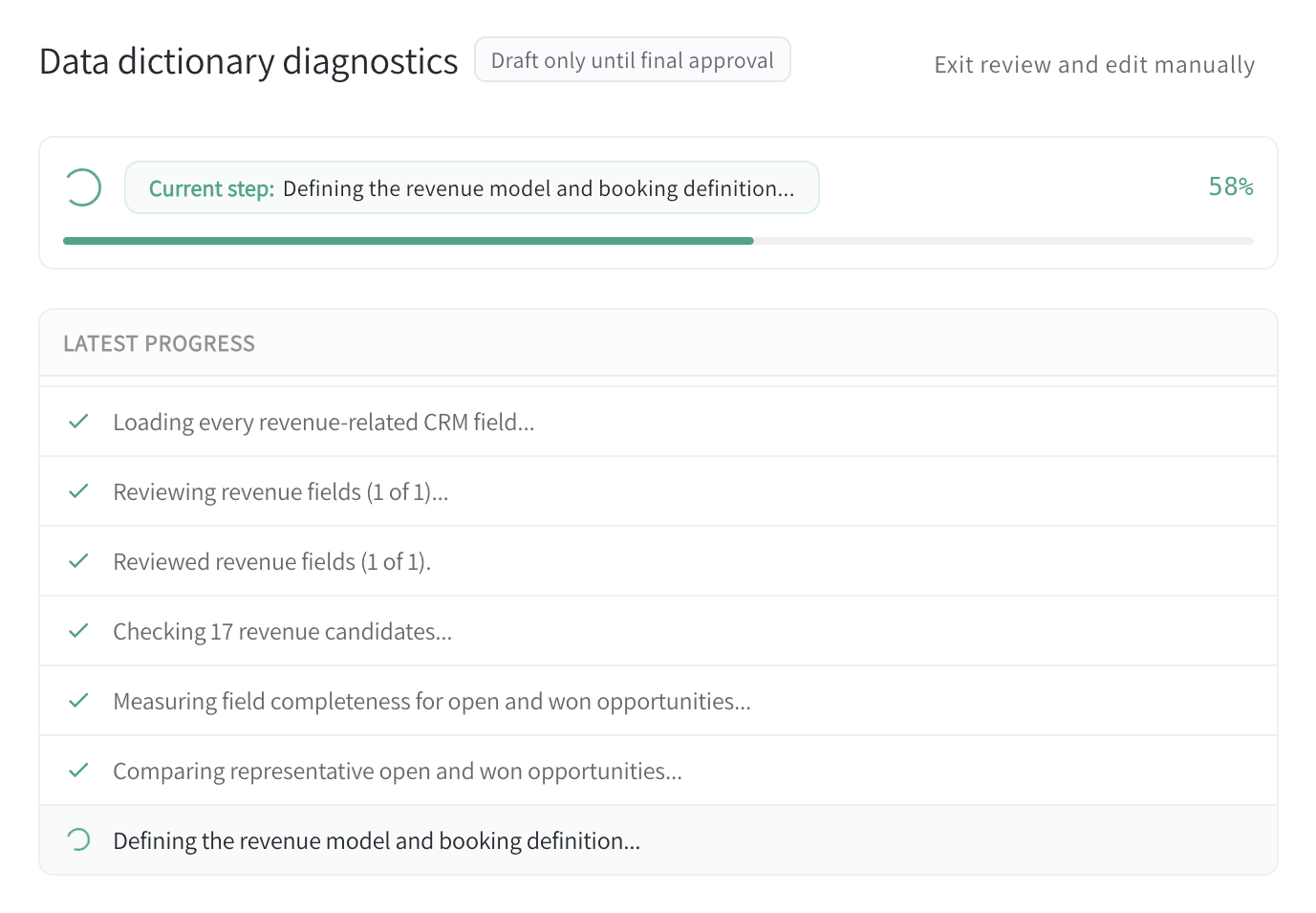
Use data dictionaries and quality checks to establish what your CRM, ERP, and billing fields mean before they become a finance answer.
02
Connect your AI through MCP
QFlow Desktop gives Claude and Codex access to QFlow tools, governed definitions, and verified recipe outputs through Model Context Protocol.
03
Share a repeatable way to work
Versioned organization skills carry your team's instructions, templates, and review steps into each reporting cycle.
GTM signals, matched to financial reality.
Bring pipeline, bookings, billing, and financial actuals into the same analysis. Define the fields and metrics before asking AI to interpret them.
- Align source fields through a governed data dictionary.
- Surface data quality issues before they reach a forecast or board slide.
- Run calculations through recipes with deterministic quality checks.
Put vetted inputs inside the AI tools you use.
QFlow Desktop connects Claude and Codex to QFlow through MCP (Model Context Protocol). Your model works with governed context and verified outputs, while QFlow runs the calculations.
Keep the definitions, recipe runs, and supporting evidence attached to the work. A reviewer can follow the number back to its source instead of reconstructing a prompt.
See how QFlow Desktop works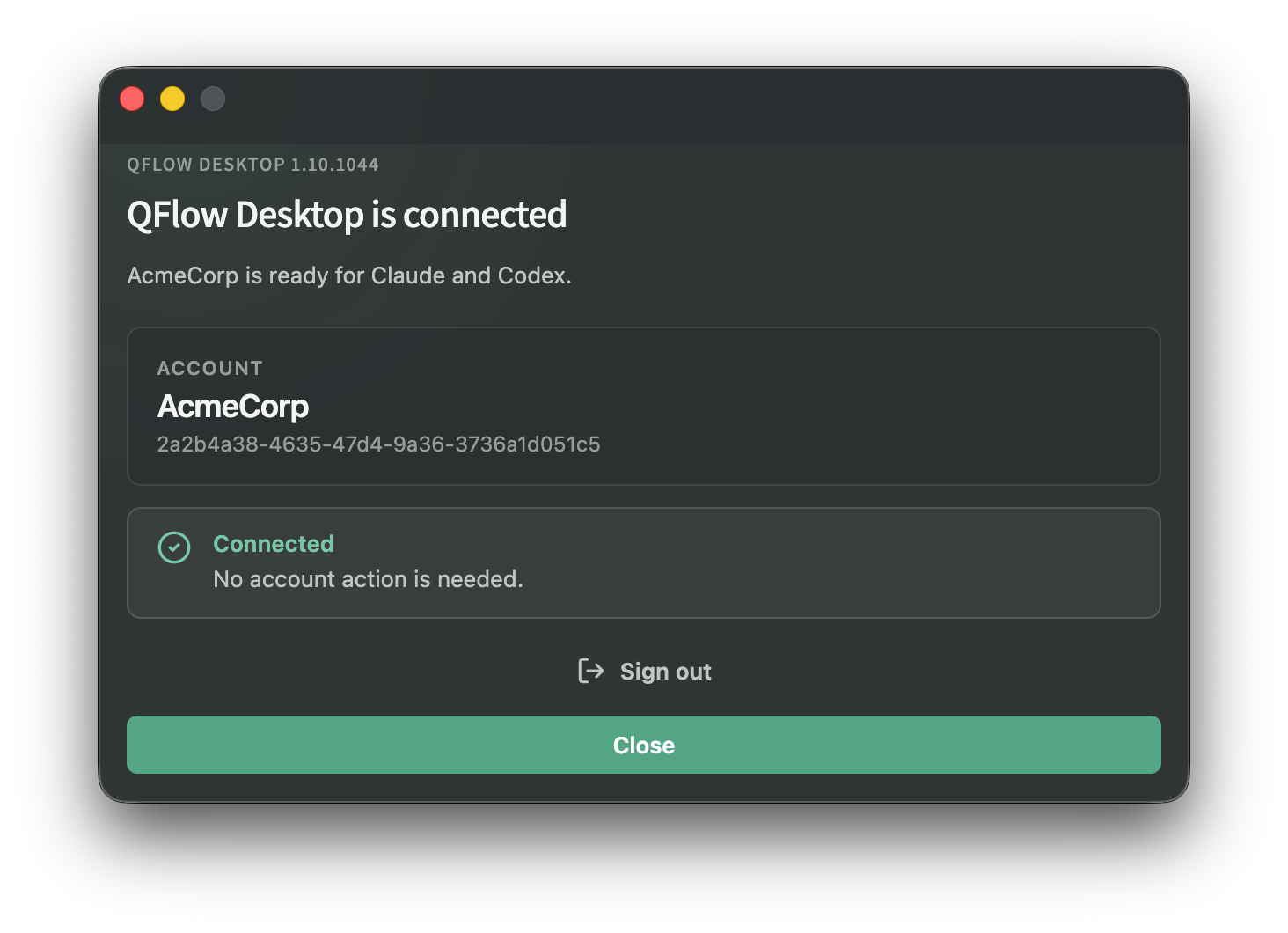
Make your team's process a shared skill.
Publish versioned instructions, templates, and review steps for recurring finance work. Claude and Codex use the same playbook, with fresh recipe results each cycle.
Board reporting
Refresh charts, supporting schedules, and narrative from governed recipe results using your team's reporting template.
Variance analysis
Compare actuals with the plan, investigate the drivers, and retain the definitions and source results behind the explanation.
Forecast reviews
Bring vetted pipeline and bookings inputs into a review of the operating forecast. Reuse the same definitions next cycle.
Consistent numbers. Room for judgment.
AI can help investigate, explain, and format the work. Governed definitions and deterministic calculations keep the analytical basis consistent. Skill versions and source evidence make the result reviewable.
Before your next reporting cycle
What does MCP add to our finance workflow?
Model Context Protocol is the connection between your AI tool and QFlow. Through QFlow Desktop, Claude or Codex can call QFlow tools and work with governed definitions and verified recipe outputs, instead of relying on a new set of pasted exports for each question.
How are recipes different from skills?
Recipes define repeatable calculations and produce governed outputs. Organization skills tell Claude or Codex how your team uses those outputs: which steps to follow, which template to use, and what to review before sharing the deliverable.
Will Claude and Codex give us consistent answers?
The models may explain a result differently. QFlow gives them a consistent analytical basis: the same governed definitions, deterministic calculations, and versioned skills. Reviewers can trace the numbers to the underlying recipe runs rather than relying on the model to recreate the calculation.
Bring a recurring finance workflow.
Start with a forecast review, variance analysis, or board reporting cycle.