Sales teams
Know your deals. Back your forecast.
Use AI to spot deal risks, pressure-test your forecast, and explore what could close the gap to plan.
QFlow connects deal evidence, your team’s judgment, and scenario assumptions so you can decide where to focus next.
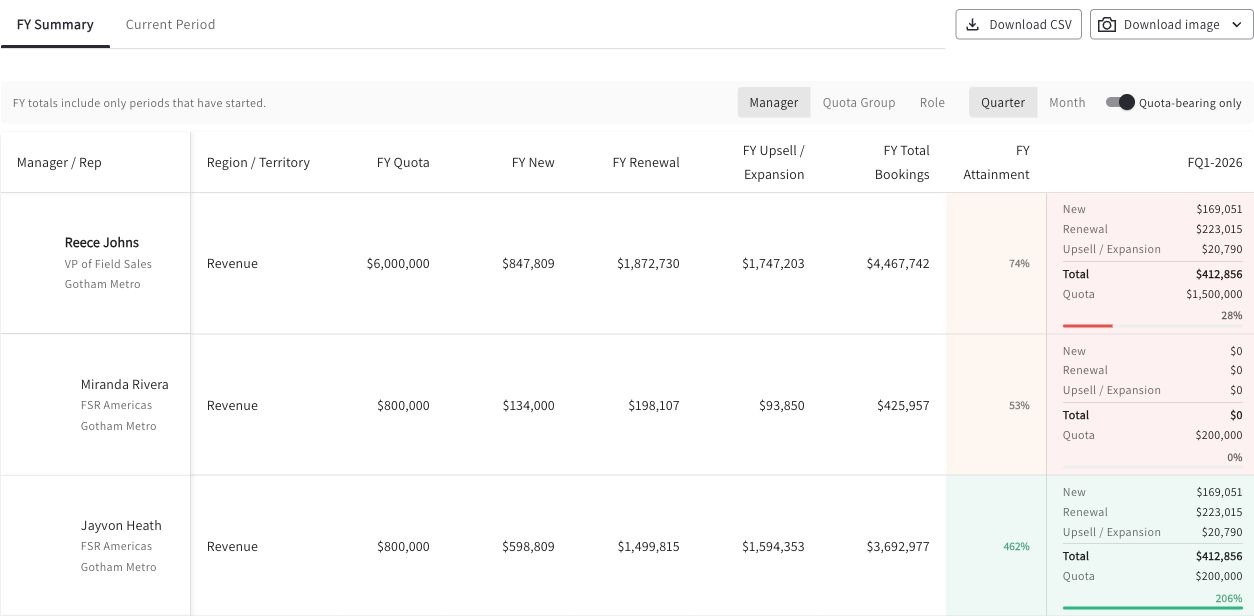
See quota, new business, renewals, and expansion alongside each rep’s attainment. Move between fiscal-year progress and quarterly detail to focus the performance review.
Trusted by








Make the deal review about the next move.
A forecast bucket tells you where a deal sits. AI deal evaluation brings the risks and supporting context into the conversation.
Review the summary, inspect the evidence, and challenge the recommended action with the rep. Keep your judgment grounded in what is happening in the opportunity.
Explore deal-level forecastingPut the signals in context
- Opportunity age and time in stage.
- Close-date changes and exit criteria.
- AI evaluation, risks, and recommended actions.
- Supporting evidence where available.
Pressure-test the forecast before you commit.
Put the team's call beside the deals supporting it. See where judgment and pipeline diverge, then discuss the gap while there is still time to act.
The team's judgment
Expected and commit submissions, forecast-owner rollups, and commentary on the deals that matter.
The pipeline underneath
Opportunity rollups by stage and forecast bucket, with a path back to the individual deals.
What changed
Forecast history, bucket changes, and pipeline movement so the review starts with the differences.
Connect the review to bookings, quota, and attainment. Compare new business, renewals, and expansion by rep, manager, or quota group, then inspect performance across the fiscal year.
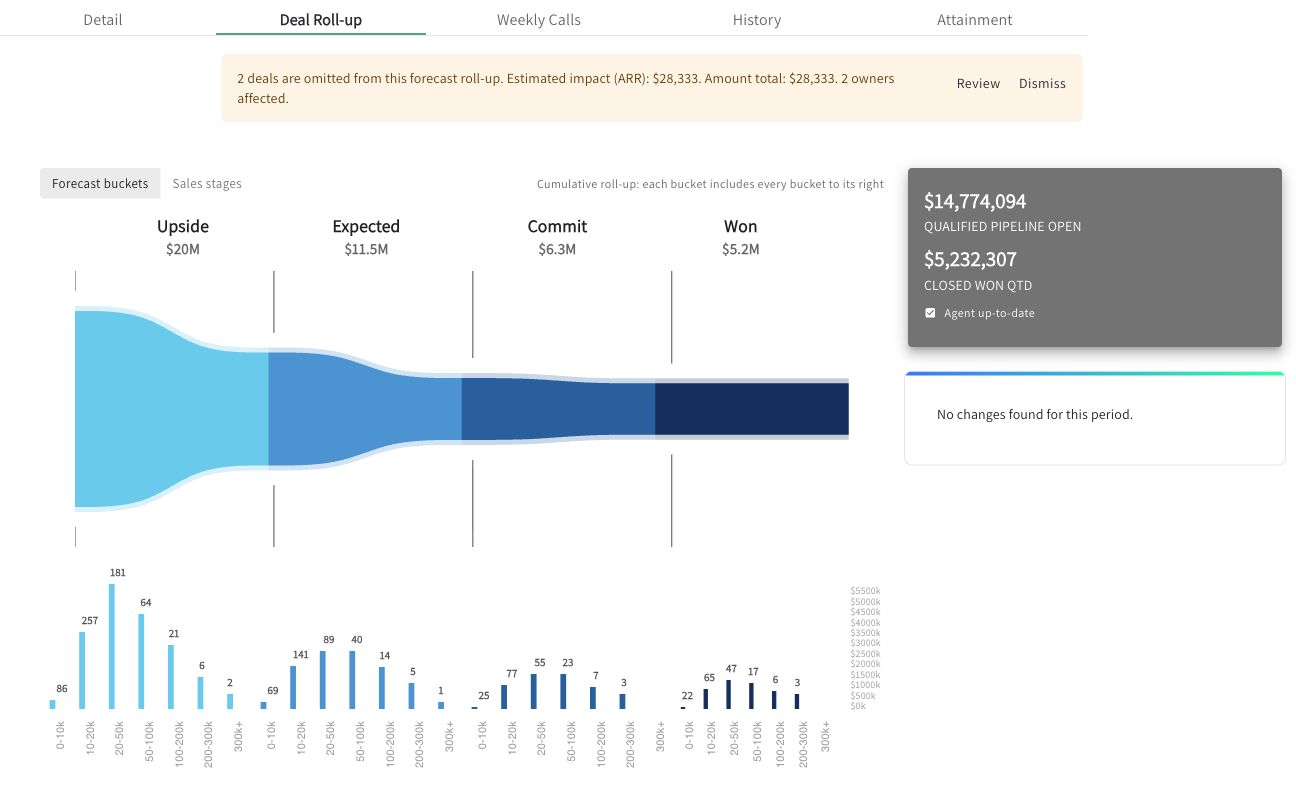
See the pipeline behind each forecast bucket, including data-quality exceptions that need review. Connect the rollup to the deals that shape it.
See what it would take to close the gap.
Model the changes your plan depends on. Combine predictions for existing deals with assumptions about new pipeline, conversion, deal size, and timing.
- Compare scenarios across upcoming quarters.
- Adjust assumptions or individual deal predictions.
- Track actuals against the plan and revisit what changed.
See how changed assumptions affect the quarters ahead. Use scenarios to weigh pipeline, conversion, and timing choices before committing to the plan.
Start the next call with what changed.
Keep deal commentary, forecast history, and pipeline movement connected. Spend less of the meeting rebuilding the story and more of it deciding where to intervene.
Before the call
Review deal evaluations and the opportunities behind the current forecast.
During the call
Compare rep judgment with the evidence. Agree on which deals and assumptions need attention.
At the next review
Check movement, updated submissions, and attainment against the prior call.
Before your next forecast call
Does AI replace the rep's or manager's forecast?
No. Rep and forecast-owner submissions remain part of the review. QFlow puts those judgments beside opportunity rollups, deal context, and forecast history. AI summaries and recommendations inform the conversation; your team makes the call.
Can we inspect what is behind a deal-level insight?
Open the opportunity context to review age, time in stage, close-date changes, exit criteria, and supporting evidence where available. Use that context to assess the AI evaluation and suggested actions instead of treating a summary as the final answer.
How does scenario planning connect to the current forecast?
QFlow combines existing pipeline predictions with assumptions about future pipeline, conversion, deal size, and timing. Compare scenarios, adjust assumptions or individual deal predictions, and track actuals against the plan as the business changes.
Bring the deals behind your forecast.
See how QFlow connects deal insights, your team’s call, and the scenarios for reaching plan.