Customer concentration
How concentrated is their revenue?
See how much revenue and ARR sit with the top customers and segments.
Corp dev teams usually burn the confirmatory window on data requests and weeks of digging. With QFlow, the target connects its systems once and your team starts on the analysis.
Get comparable growth metrics and 36+ month bookings, ARR, and revenue scenarios. Carry the same foundation into integration.
Every target has messy data. Hygiene checks flag what is broken, and you get the extent of the mess as a diligence finding of its own.
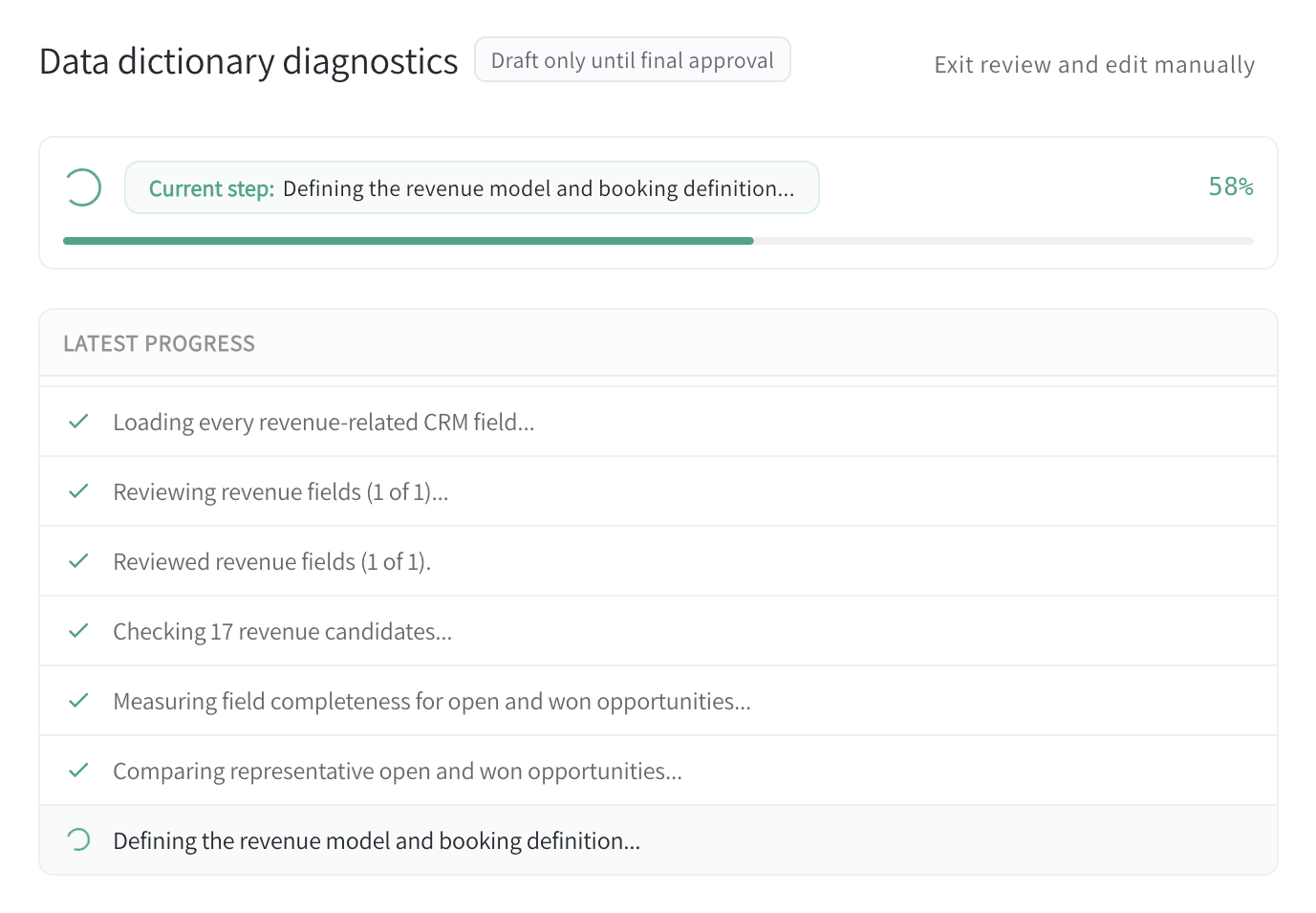
Connect the target and acquirer systems, such as Salesforce, ERP, and billing.
AI-assisted configuration builds data dictionaries and vetted datasets in minutes.
Run growth analysis and scenarios on normalized data without new export requests.
Start with questions like these, then follow the answers into the specifics of your acquisition. Use consistent definitions to explore what drives growth and what it takes to sustain it.
Customer concentration
See how much revenue and ARR sit with the top customers and segments.
Sales efficiency
Compare rep productivity, attainment, and cycle length on shared definitions.
Customer overlap
Match both customer lists to separate shared accounts from cross-sell targets.
Rep ramp
Compare hiring cohorts to see how quickly new reps become productive sellers.
Growth scenarios
Model 36 months of bookings, ARR, and revenue from assumptions your team sets.
Renewals
Track renewal, churn, and expansion by cohort to see how much revenue recurs.
Match companies and transactions to understand customer overlap. Then model the cross-sell and growth opportunity with explicit assumptions.
Target A
Target B
Acquirer
One combined view
Matched customers and transactions
Comparable growth and financial metrics
Individual entities and combined outcomes
Start integration with shared definitions, matched customers, and a common view of performance. As connected systems update, ongoing AI customer matching keeps overlap and cross-sell opportunities current.
Diligence
Carry data dictionaries and vetted datasets into integration while source systems stay separate.
Integration
AI matching keeps running as records change, so shared accounts and cross-sell targets stay current.
Ongoing operations
QFlow rolls up metrics across entities and checks the deal model against actuals every month.
Give corporate development, finance, and operating teams the same governed approach. The work you establish for diligence becomes the work you run after close.
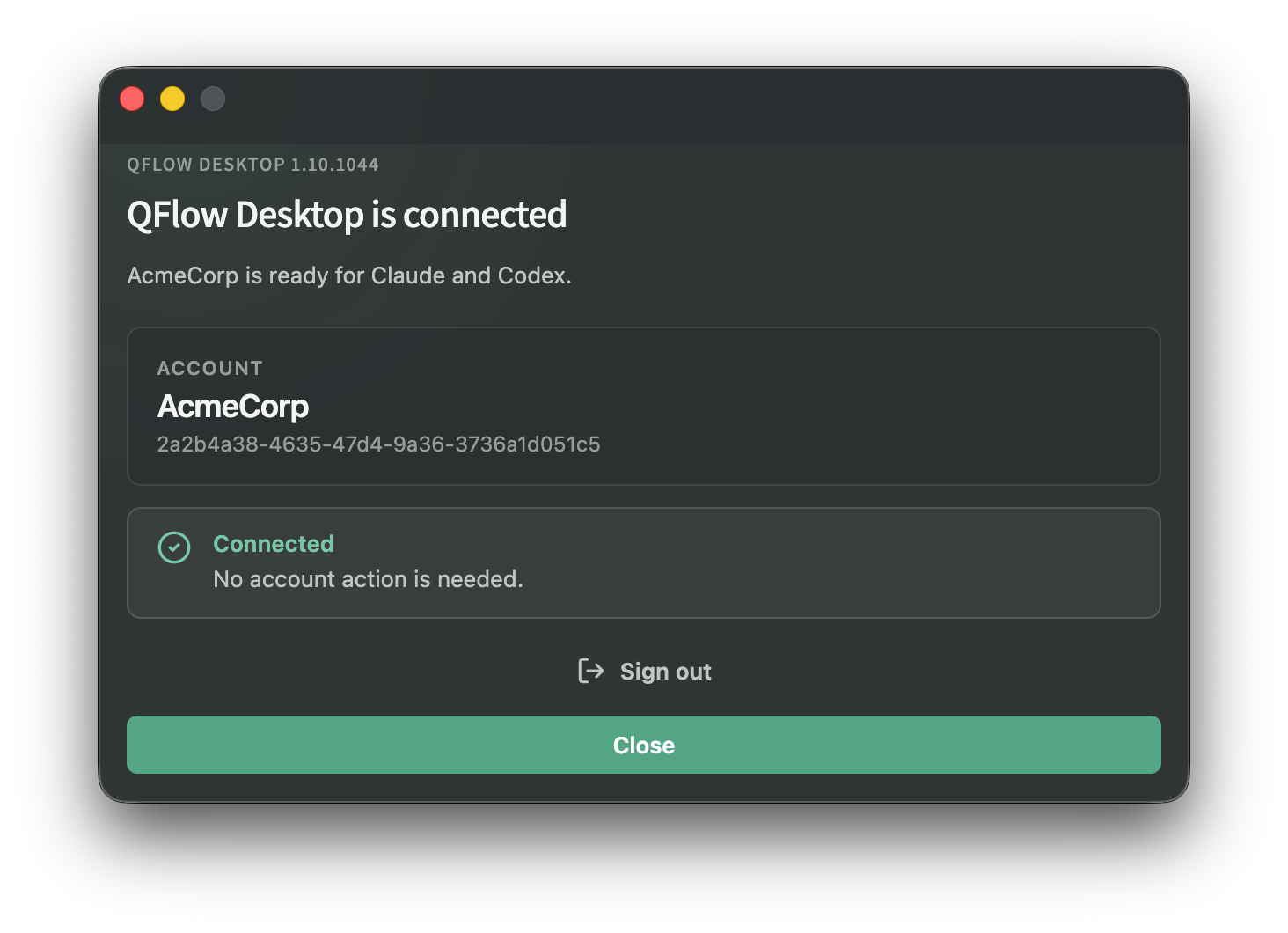
A warehouse centralizes tables. It does not align definitions between two companies or tell you which records are broken.
QFlow adds governed definitions, finance-grade metrics, hygiene checks, and customer matching, so you measure the target and the acquirer the same way. Your team gets comparable metrics without running a warehouse project inside the diligence window.
Claude and Codex work well for exploring questions. On raw exports, a model has to guess at definitions, and it can give a different answer each time you ask.
QFlow runs the calculations deterministically on normalized data with governed definitions, and keeps sources and assumptions attached to each result. Claude or Codex then works from those verified results through QFlow Desktop, and your reviewers can rerun the same analysis.
Act-On cut the time from analysis to decision from weeks and days to hours (read the case study). Finance and revenue operations teams reduce the time they spend assembling analysis and reports by as much as 90%.
Those results come from operating teams. In diligence, the saving comes from the same place: the target connects its systems once, so your team stops waiting on rounds of data requests.
Discuss your target companies, priority questions, and integration goals, from confirmatory diligence to life after close.
Product