Run the Business
Know what changed. Act on what matters.
Automatically capture goals, compare actuals, and keep variance analysis running with QFlow Recipes. Catch the gaps while there is still time to act.
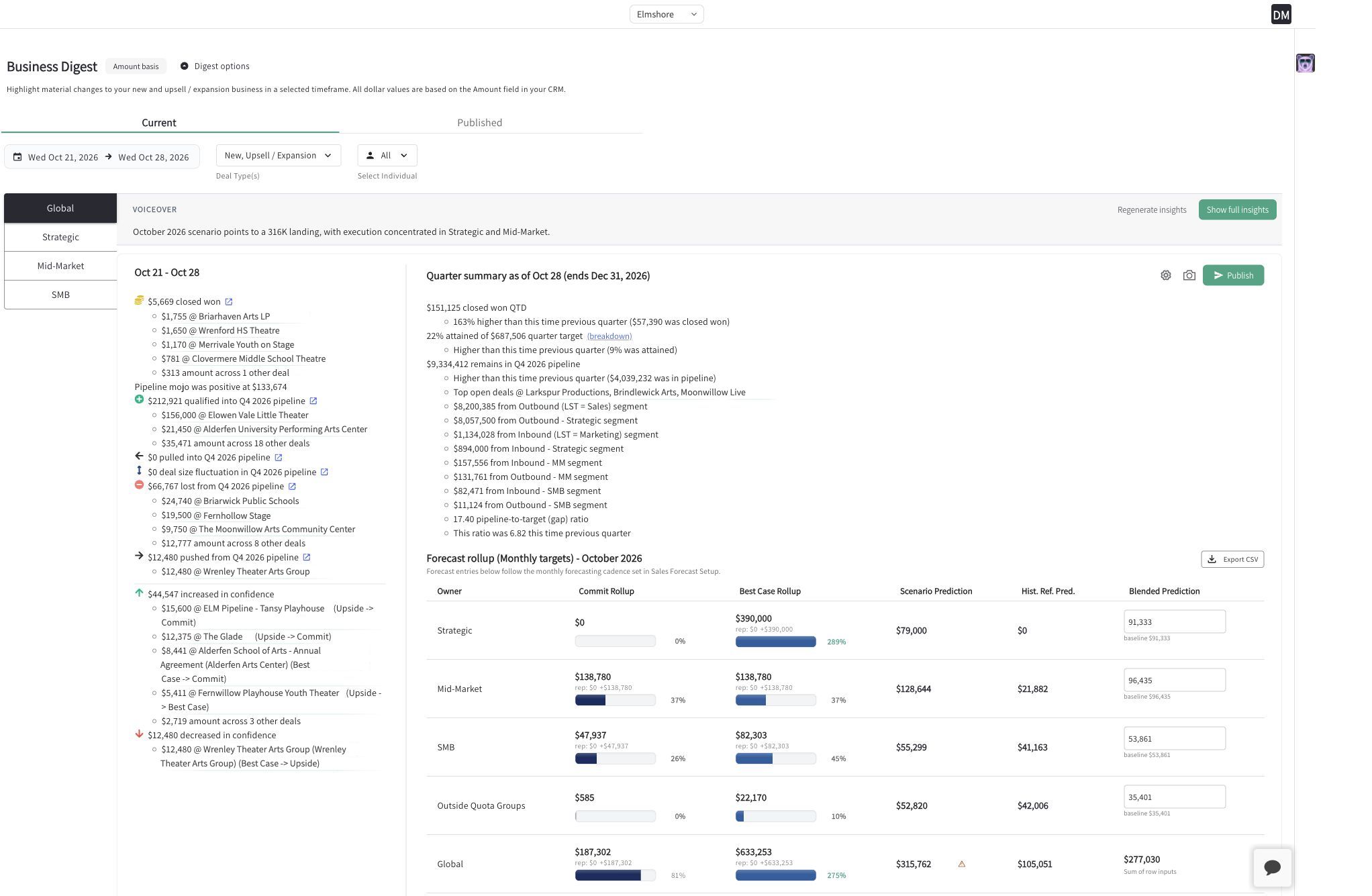
Business Digest brings pipeline movement, goal progress, and forecast changes into one extensible view. Inspect the deals behind each number, then build the briefing into a recurring Recipe.
From the goal to the gap to the next move.
The plan should stay in the operating conversation all quarter. Connect the targets, the investigation, and the briefing.
Goals and GTM Stats
Capture the targets automatically
Bring a spreadsheet or screenshot of your plan. QFlow extracts the goals for review, then puts the approved targets alongside actuals by period and segment.
Explore goals and actualsRecipes
Keep variance analysis running
Compare current results with the goals, identify material gaps, and investigate the contributing deals and trends. Repeat the analysis as business data changes.
Explore RecipesBusiness Digests
Bring the findings to the team
Combine goal variances, pipeline movement, and deal context in a recurring briefing. Deliver recipe findings through Slack, Teams, email, or a webhook.
Explore Business Digests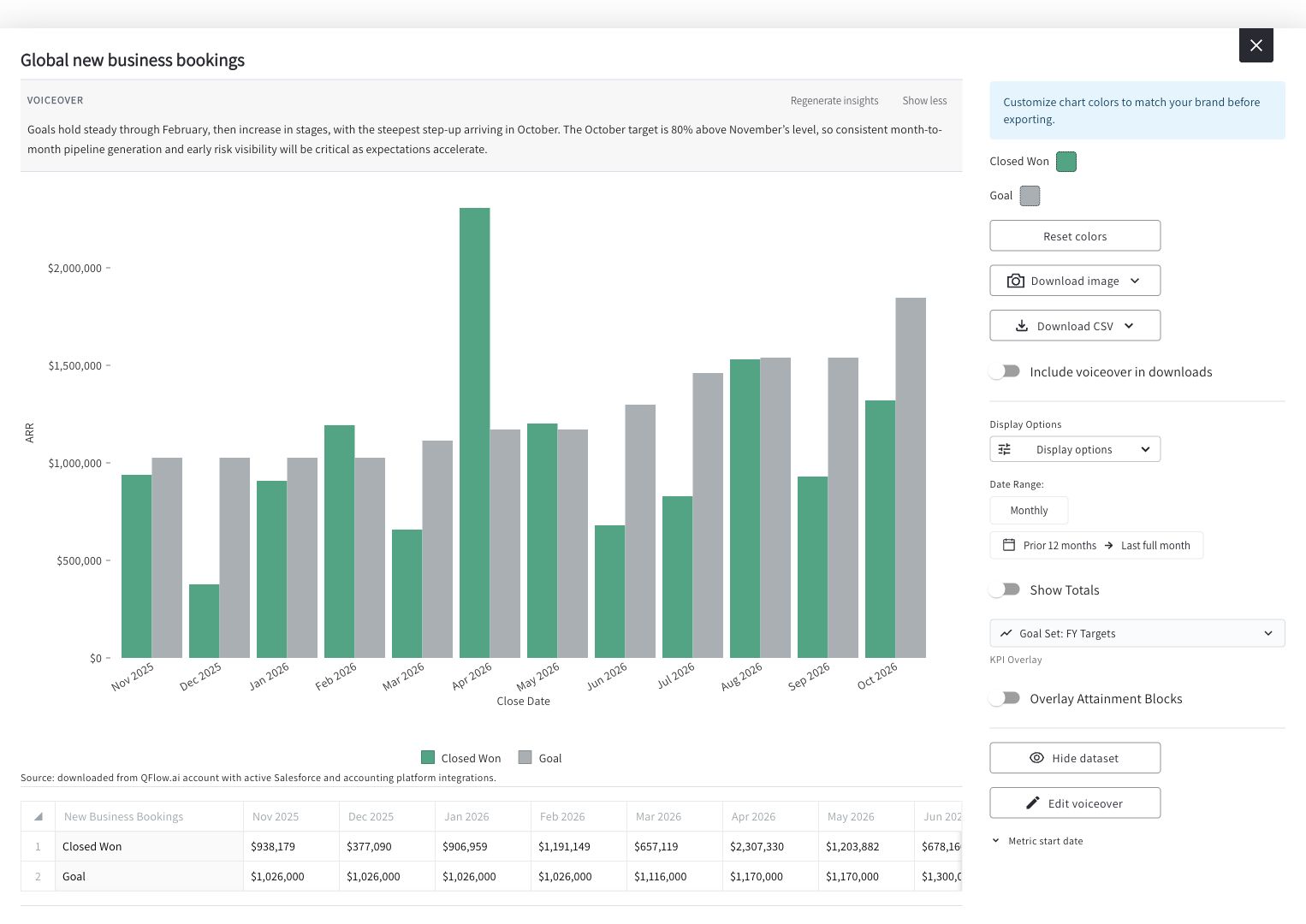
See where actuals are ahead of plan or falling behind. GTM Stats keeps goals, results, and underlying values together so variance analysis starts from the same facts.
Investigate the variance before the next meeting.
Give Recipes the goals, comparison periods, and thresholds. Let them repeat the analysis on fresh data and surface the gaps that need attention.
Start with the measured difference. Explore pipeline creation, conversion, deal size, or timing, then inspect the records behind it. Deterministic calculations establish the gap; AI investigates and explains the evidence.
See how Recipes workBuild the review once and repeat it on fresh data. Recipes keep the analytical steps and their outputs inspectable, so your team can reuse the method and investigate any result.
Give the exception a proper review.
A changed number starts the investigation. Bring the records, conversation context, and missing evidence into the discussion.
- What the records show
- Inspect the goal, actual result, variance, and contributing deals for the same period and segment.
- What the analysis suggests
- Read the explanation alongside its evidence gaps.
- What the team will do
- Agree on a next step and what to check at the next review.
Turn findings into a deal-level review of what changed, what the evidence supports, and what is still missing. Keep the next action tied to the underlying analysis.
Different meetings. The same discipline.
Choose the questions and evidence that matter to each team. Keep the method consistent from one review to the next.
Leadership review
Where are we moving off plan?
- Quarter-to-date attainment, gaps against goals, and material exceptions across teams.
Sales review
Which gaps need a deal-level response?
- Bookings and pipeline against targets, slipped dates, changing commitments, and missing buyer evidence.
Marketing review
Is demand keeping pace with the goal?
- Pipeline creation and conversion against plan, campaign contribution, and win/loss context from available calls and notes.
Finance and operations
What moved against the operating plan?
- Actual-to-goal variances, revenue and retention measures, and reconciliation exceptions worth investigating.
Bring the gap to the team while it still matters.
Deliver the recipe's variance analysis through Slack, Microsoft Teams, email, or a webhook. Include a Business Digest for pipeline and forecast context. Use QFlow Desktop and MCP with Claude or Codex to investigate the next question, then carry that method into the next run.
“This is exactly what we needed to get the team aligned and make sure we're all focused on the right things.”
Building your operating rhythm
How does QFlow capture our goals?
Upload a spreadsheet or screenshot of your plan. QFlow extracts the targets and prepares them for review, including their periods, metrics, and segments. Review the interpretation before importing. The approved goals can then sit beside actuals in GTM Stats and serve as inputs to recipe-based variance analysis.
Can variance analysis run between business reviews?
Yes. Recipes can repeatedly compare current actuals with your goals, identify material variances, and investigate the supporting records. Set the comparison periods, segments, thresholds, and delivery schedule for your team. The analysis uses the latest available source data, so its freshness follows your data refresh and recipe execution cadence.
How do Business Digests and Recipes work together?
Business Digest is an analytical tool that can be included in a recipe. It assembles pipeline changes, material deals, and forecast context into a briefing. The recipe defines the wider workflow, including additional calculations, interpretation, scheduling, and delivery.
Can different teams receive different reviews?
Yes. Set the relevant period, group, measures, and materiality thresholds for the review. A leadership briefing can emphasize the changes that affect the quarter, while a team review goes deeper into the deals or segments that need attention. Configure the recipe and destination for its audience.
How is this different from another dashboard or saved prompt?
A dashboard makes results visible. A recurring review also needs an agreed method for investigating changes and preparing the discussion. Recipes save the sources, filters, calculations, and analytical steps so the next run follows that method. AI can explain the findings while the underlying results remain inspectable.
Does AI establish why a metric changed?
AI can propose an explanation and surface relevant deal context. A measured change alone does not establish its cause. Inspect the contributing records, available conversations, and evidence gaps before deciding what to change. The review should make that distinction clear.
Can we use Claude or Codex for follow-up analysis?
Yes. QFlow Desktop and MCP make governed business context, recipes, and analytical tools available to Claude and Codex. Use them to investigate a follow-up question. Organization skills carry your team's review instructions and reporting conventions into the next cycle.